Baseboards and casing
State the approximate length and show corners, ends and transitions. Existing profiles may need a close match or an agreed alternative.
Homecraft Pro / Services / Trim & finishing
Small areas of skirting, moulding and doorway trim can need refixing, filling or local touch-up. Describe the affected length, the material and the finish. Mention signs of moisture, movement or repeated damage rather than treating them as decoration alone.
Tell us about your project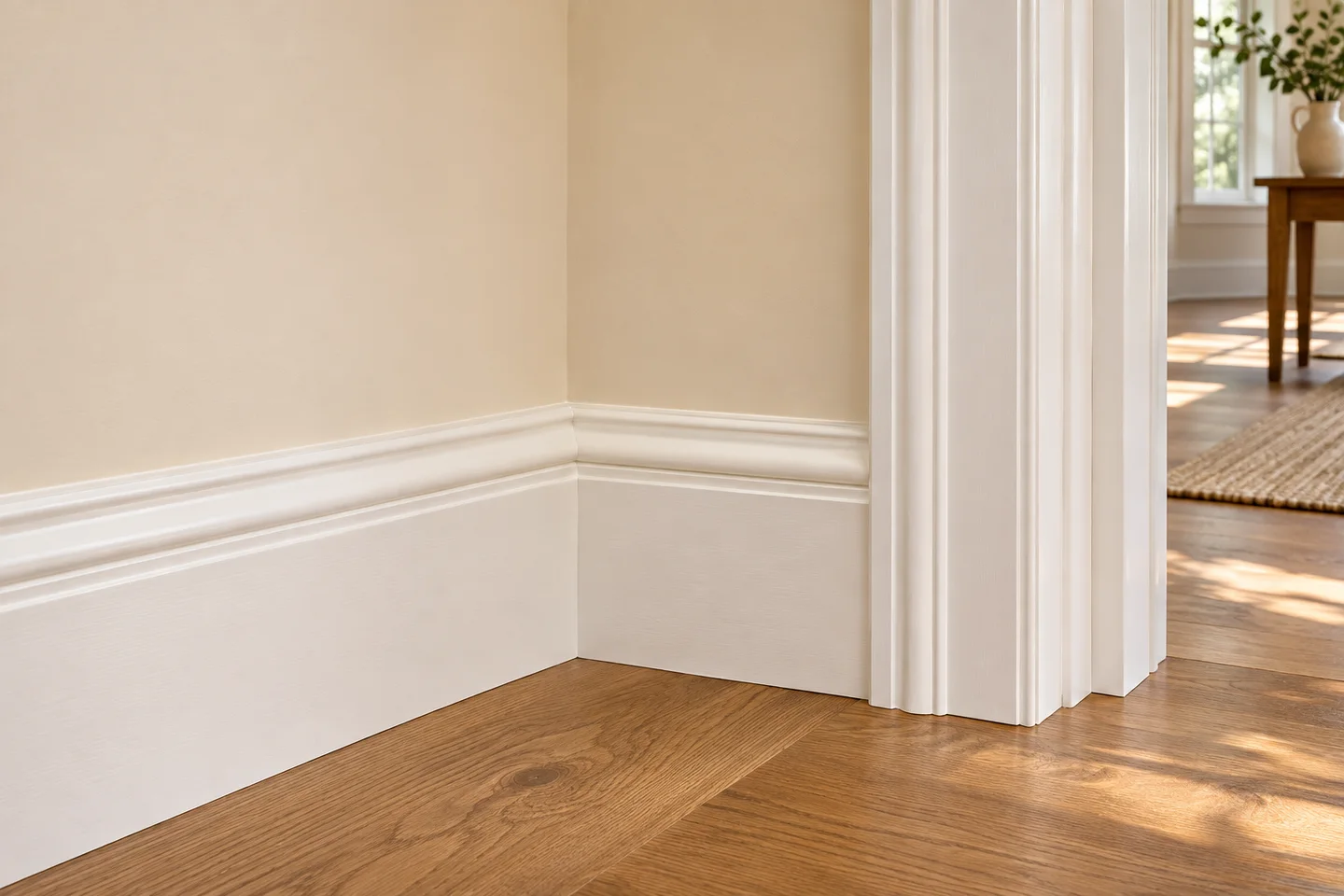
A short run of damaged baseboard or a loose piece of casing can make a finished room look incomplete. Matching profile, material and paint finish matters, particularly when a small replacement joins an existing run. Share both the damaged section and the surrounding detail so the scope can include a realistic approach to the join and finish.
State the approximate length and show corners, ends and transitions. Existing profiles may need a close match or an agreed alternative.
Describe whether the piece is detached, split, swollen or marked. The supporting surface and cause of damage can affect the repair.
Cutting, fixing, filling, caulking and painting are separate stages that should be clearly included or excluded.
Historic mouldings, extensive rot, hazardous finishes and structural components may need a specialist rather than a small trim repair.
Include an overview, a close-up of the shape and any approximate lengths you have.
Review available materials and how new and existing finishes will meet before work proceeds.
Check the agreed joints, fixing points and finishing stages, including any paint work that remains.
That depends on the availability of the original profile and finish. An alternative should be agreed before it is fitted.
Only when it is part of the agreed scope. Ask about primer, final coats, drying and the supply of paint.
The moisture source and material condition need assessment first. Replacing a visible piece alone may not solve the underlying problem.